
Will Como 1907 Leave the Sinigaglia?
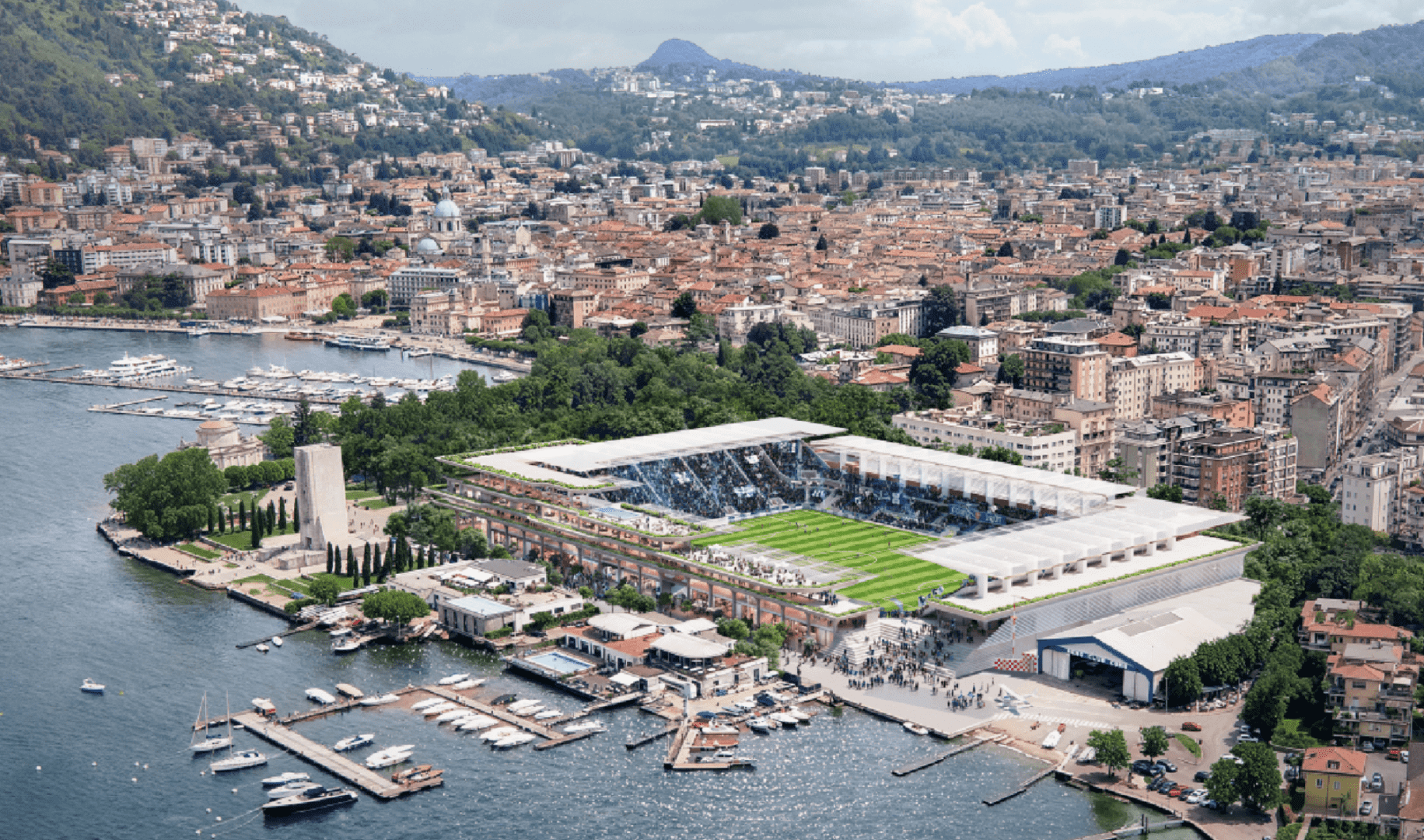
Como want a modern stadium on the lake, with more hospitality and income beyond matchdays. The plan centres on the Sinigaglia’s existing site, but the design, approvals and construction timetable remain important unfinished business.
 Sofia
Como 1907’s publicly announced plan is to redevelop the Sinigaglia on its existing lakeside site. There is no confirmed plan for a permanent move to a different stadium. Whether every match can remain there throughout future construction is a separate question, and the final arrangements have not been established in the announcements reviewed for this guide.
That distinction explains much of the confusion. When club president Mirwan Suwarso talks about a “new stadium”, it is easy to imagine Como packing up and leaving the lake. The project being pursued with the city is a transformation of the Giuseppe Sinigaglia itself.
For supporters, that is encouraging. It also leaves plenty to discuss: how much will change, how the work will be funded, what happens to the surrounding neighbourhood and when construction can actually begin.
Are Como building a new stadium or renovating the Sinigaglia?
The official project is the redevelopment of Stadio Giuseppe Sinigaglia. Como, the municipality and architects Populous announced the initial proposals in February 2025.
“Redevelopment” can involve substantial rebuilding, rather than simply replacing seats or repainting stands. Staying at the same address does not mean preserving every part of the stadium exactly as it is.
The club’s announcement explicitly identified the early images as concepts, rather than a final design. Supporters should therefore treat those familiar renderings as an illustration of the ambition, not a guaranteed picture of the finished ground.
Suwarso’s stated objective was to keep the Sinigaglia central to local life while making it useful throughout the year. Mayor Alessandro Rapinese welcomed the project as something intended to serve the wider community as well as football.
What has Mirwan Suwarso said about the stadium plans?
In the Business of Sport interview clip, Suwarso describes a relatively compact stadium built around hospitality. His priorities are clear:
A construction budget target of approximately €64 million.
A stadium of around 15,000 spectators, a scale he says would make the club happy.
Six restaurants and a rooftop bar overlooking the lake.
A projected €25 million a year from that restaurant-and-bar offering, before other food and matchday hospitality income.
An ambition to start building in 2027.
The interview publisher’s written account of the discussion also presents the financial figures in euros. These are the president’s targets and projections, rather than a final construction contract or established operating income.
His description of a “small stadium but a boutique feel” captures the commercial idea. Como are not trying to match the largest clubs seat for seat. They want the location to support a business that operates between fixtures.
There is a straightforward reason why that matters to the relocation question. A restaurant overlooking Lake Como cannot carry the same proposition from an anonymous site elsewhere. In my reading, the commercial strategy gives the club an additional reason to remain beside the lake, alongside the sporting and emotional reasons.
The projected €25 million should not be read as profit. Restaurants still have staffing, supplies, utilities and operating costs. Nor does the interview establish how much of any future turnover would ultimately be retained by the football club. It explains the ambition, not a guaranteed return.
Will the redeveloped Sinigaglia hold 15,000 people?
That is Suwarso’s stated aspiration, but it is not a settled final capacity.
The planning discussion has included a smaller figure. ComoZero’s July 2025 report on revisions requested through the heritage process described approximately 14,000 seats, together with a lower structure and changes to its position near the Monumento ai Caduti.
The municipality’s published preliminary conference record also documents negotiations over the building’s height and its relationship with the surrounding landscape. That illustrates why a president’s preferred number and the eventual approved number can differ.
The useful working description is a proposed compact stadium in the 14,000–15,000 range, with the final capacity dependent on the approved design. It would be premature to sell either figure as a certainty.
What does the city of Como say?
Rapinese has been explicit about the location. In a March 2026 interview reported by La Provincia, the mayor reiterated that his electoral programme envisaged the stadium being rebuilt where it already stands.
That is significant political support. The municipality and club are aligned on keeping football at the Sinigaglia site, rather than presenting competing locations as their preferred options.
However, the mayor’s support does not settle every aspect of the project. In the same discussion, he referred to the financial plan and advocated a multi-storey car park on the site of the nearby school. The stadium’s future therefore reaches well beyond its perimeter.
There are residents, pupils, businesses and people using the lakefront to consider alongside supporters. Agreement that Como should have a better stadium is not automatically agreement about every building, parking space or commercial use proposed around it.
Has the new Sinigaglia received final approval?
The records and recent statements reviewed here do not establish final approval for the full redevelopment.
The Comune di Como published a positive conclusion to the preliminary services conference, dated 7 January 2026. That is a documented step forward, but the word preliminary matters.
The accompanying municipal record contains conditions and matters for further design work, including noise, drainage and flood-related considerations. A lakeside site carries practical constraints as well as commercial advantages.
A particularly useful update came on 3 November 2026. In his interview with La Provincia, Suwarso said the revised proposal was ready to be submitted following the objections and requested changes. He did not give a submission date, explaining that his offices would handle that stage.
He also said the timetable would have to follow the applicable procedures. That is more cautious than treating “we can start building in 2027” as a confirmed start date.
When could work start, and when would it finish?
Several different dates have circulated, and they should not be combined into a single supposedly confirmed schedule.
The February 2025 announcement envisaged design and approvals by May 2026, followed by construction milestones in October 2027 and August 2028. Those were the project’s original published targets.
Suwarso’s interview subsequently identified 2027 as the hoped-for construction start. His November update, meanwhile, described a revised proposal ready for submission.
Taken together, those statements mean the old timetable needs to be treated as historical. There is no basis here for promising that the fully redeveloped Sinigaglia will open in August 2028. A dependable completion date requires an updated programme tied to the agreed scope and approvals.
For anyone planning a future football trip, a rendering with a date attached is not enough. Check the club’s match-specific announcements before booking around a particular stadium configuration or hospitality offering.
Would Como have to move out during construction?
The early project envisaged work in stages to keep the stadium operating.
La Provincia’s March 2025 account of the submitted documents described phased construction intended to maintain opening for sporting and other events, including temporary seating arrangements while sections were rebuilt.
That is useful evidence of the original intention. It is not a guarantee that every fixture can remain at the ground under a revised construction plan. Safety requirements, usable capacity and the sequence of work will matter.
I have not found a confirmed alternative home announced specifically for the full redevelopment. Reports naming Reggio Emilia or Udine have concerned contingency arrangements around the separate 2026 works needed for European football. They should not be repackaged as an announcement that Como are moving there for the long-term project.
For supporters, the distinction is simple: a temporary relocation, if one eventually becomes necessary, would not in itself mean abandoning the Sinigaglia permanently.
Haven’t Como already rebuilt part of the stadium?
Yes. This is another reason the story can be confusing.
Como completed a programme of upgrades for the 2026/27 European campaign, including a new stand and changes to infrastructure, safety and operational facilities. The club subsequently confirmed approval to host Champions League home matches at the Sinigaglia.
Those completed works should be distinguished from the wider redevelopment and hospitality proposal. Permission to stage European matches does not, by itself, approve every part of a future stadium scheme.
The interview’s €64 million ambition should likewise not be presented as an audited bill for the stand already completed. Suwarso was discussing the longer-term vision for the venue.
What could delay or change the project?
The outstanding issues include design, financial arrangements, neighbourhood impacts and legal challenges.
The latest local reporting is relevant here. On 10 November 2026, EspansioneTV reported a pending administrative-court challenge involving both the broader redevelopment process and the recent stand works. It reported a hearing scheduled for 10 December.
The broadcaster also described a municipal communication confirming a sanction for starting the stand works before the required waiting period had elapsed, and an August design variation removing certain permanent commercial premises in favour of temporary containers.
That reporting does not establish that the larger project has been cancelled, or that Como must leave. It does show why approval and construction cannot responsibly be described as formalities. A pending hearing is not a ruling, and its outcome should be checked when this guide is updated.
Beyond the legal process, local political debate concerns traffic, parking, access and the public benefit of the development. La Provincia’s reporting on the response to Suwarso’s November update records calls for the council and city to be properly involved.
These are legitimate questions for a major project on a prominent piece of Como’s lakefront. Support for the club and scrutiny of its stadium plans can coexist.
Can Como modernise without losing what makes the Sinigaglia special?
For me, the strongest reason for optimism is the commitment to the location. The club’s identity and its commercial plans both depend heavily on being here. The president’s ambition and the mayor’s position point towards a future at the Sinigaglia.
The more difficult question is what that future feels like for regular supporters. Better facilities, improved access and additional income could strengthen the club. The balance between ordinary seats and hospitality, ticket affordability and the treatment of neighbours will determine how widely those benefits are shared.
Suwarso’s November interview also reaffirmed an intention to provide lower-priced food areas for local people. That is a welcome promise to follow through the design process, alongside the rooftop bar and restaurants.
Como supporters have good reason to hope they can keep their lakeside home and gain a better stadium. The evidence supports that direction. The details still have to earn the same confidence.
Quick answers about Como’s stadium plans
Are Como leaving the lakefront permanently? No permanent relocation has been announced in the material reviewed. The proposed redevelopment is at the existing Sinigaglia site.
Is construction confirmed for 2027? It is Suwarso’s stated target, not a guaranteed start date. His November 2026 comments emphasised the remaining procedural timetable.
Will the finished stadium definitely have 15,000 seats? No. That is the president’s aspiration; planning coverage has also described approximately 14,000.
Will Como play elsewhere while work takes place? The original scheme sought to keep the venue open through phased work. The arrangements for the revised project remain to be confirmed.
Comments (0)
Be the first to comment.