
What Does Como 1907 Do for the Local Community?
Behind Como’s growing international profile is a network of school programmes, accessible football, medical fundraising and neighbourhood projects. Here is what the club supports, who benefits and where the evidence comes from.
 Sofia
Como 1907 supports the local community through school education, disability football, accessible matchday services, health screening, charity fundraising and improvements to neighbourhood sports facilities. Much of this work involves Fondazione Como ETS, the club’s Community team and organisations already serving people in Como and the surrounding area.
That answer deserves more attention than it usually receives. Discussions about Como’s transformation tend to revolve around ownership, recruitment and international ambition. For people living nearby, another set of questions matters: can their children use a decent football pitch? Can a supporter with a disability get to a match? Does the club help when the city is in trouble?
There are concrete examples across all three. There are also distinctions worth making between what Como delivers itself, what it helps partners deliver and what has been announced for the future.
How Como 1907’s community work is organised
The club’s official community projects directory groups its work around inclusion, education, sport for all, health and wellbeing, environmental sustainability and community engagement. Fondazione Como ETS features throughout that programme.
Many initiatives depend on specialist partners: educators, disability organisations, healthcare providers and volunteers. Giving those organisations proper credit matters. A football club can contribute funding, facilities, visibility and access to supporters; the daily work often belongs to people whose expertise extends well beyond football.
School programmes: physical education and positive support
Two of Como’s clearest education initiatives are Piscinin and Respect & Play.
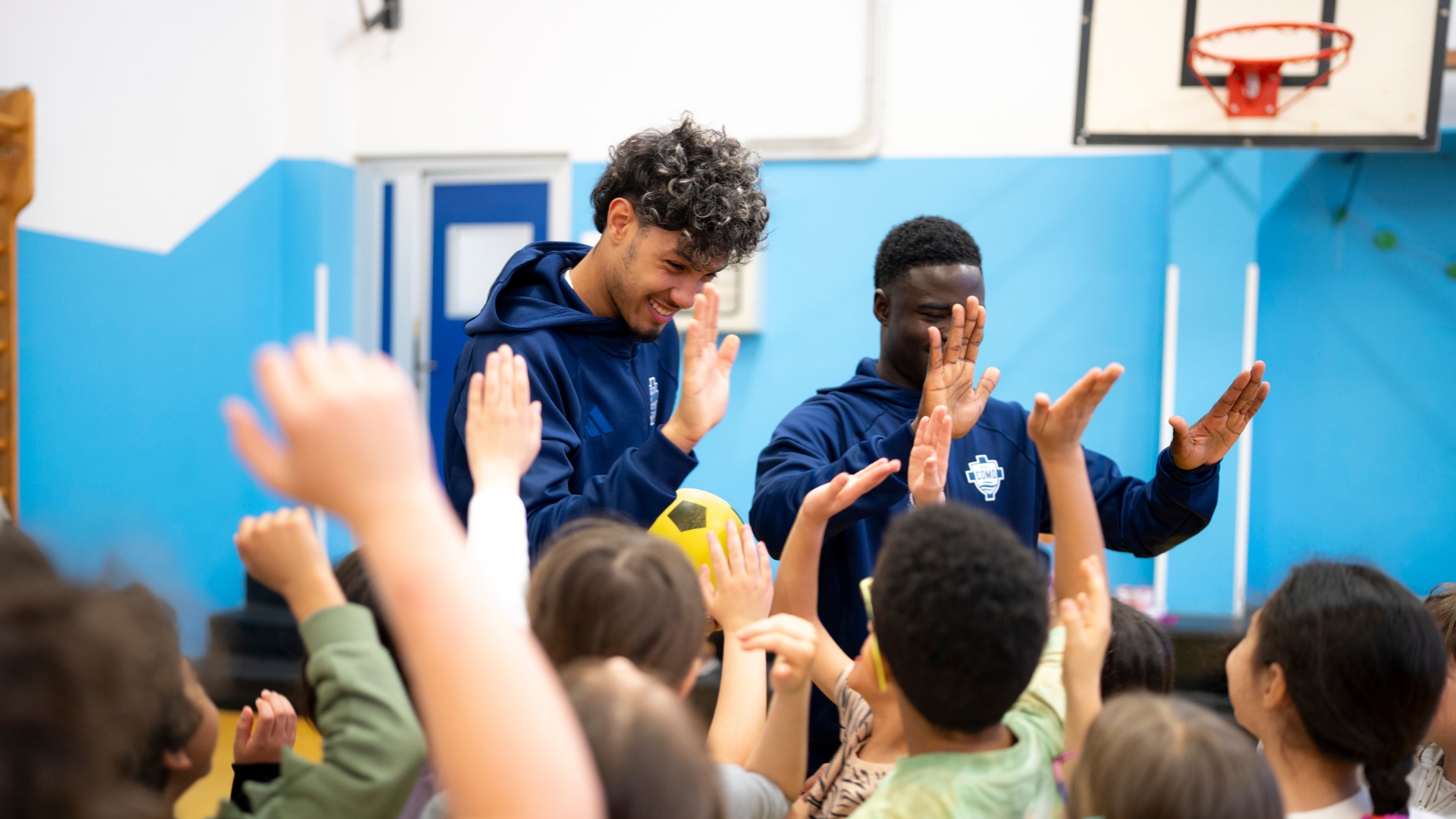
Piscinin brings structured physical education into local primary schools, particularly the first three school years. Club-supported instructors work with teachers, combining movement and games with classroom learning. The intention includes leaving teachers with activities they can continue using after the sessions finish.
An earlier club update reported that the programme was operating in 12 classes, with expansion to 26 planned. Those figures describe that update, rather than a verified current total. Como’s 2025/26 community review subsequently recorded Piscinin’s third edition.
Respect & Play, developed with Teste di Serie and Polisport SSD, addresses how children participate in sport and support a team. Classroom discussions cover respect, fair play and behaviour towards opponents, followed by practical activities and opportunities to attend a match at the Sinigaglia.
For a club trying to build its next generation of supporters, this is an opportunity to teach what supporting Como should mean. Learning to cope with disappointment and respect another team is useful long before a child can explain an offside trap.
Disability football and support for young people
Como’s community football extends beyond its conventional academy teams.
LINKS, adopted as Como’s Special team in 2022, participates in the Italian federation’s Divisione Calcio Paralimpico e Sperimentale, or DCPS. The club’s sport-for-all programme describes a partnership giving players with disabilities opportunities to train, compete and belong to a team. The same programme includes support for disability sport through OSHa Como and wheelchair tennis in Cantù.
FuoriClasse works with children and young people on the autism spectrum or with intellectual disabilities. It combines football with educational and social support through the partnership with Fondazione Somaschi.
There is evidence beyond Como’s own publicity here. Fondazione Somaschi’s account of FuoriClasse confirms the collaboration and the team’s Sport e Inclusione 2025 award. It describes communication, relationships and emotional development as central to the work.
Como also supports So-Stare, Somaschi’s educational centre. A club report on the two projects described So-Stare serving around 30–35 children and adolescents aged six to 17 each day, working with schools, social services and local specialists. That is the centre’s reported reach, not a claim that Como alone funds or delivers every service.
The value of these partnerships lies in their regularity. A weekly session, familiar coaches and a group of teammates can offer something a single ceremonial appearance cannot.
Making the Sinigaglia more accessible
Community inclusion also means helping people watch the first team.
Como launched Connect Me Too audio description in April 2025 for blind and partially sighted supporters. Professional descriptive commentary is transmitted to smartphones through the service’s app. The launch announcement described it as free and available during home matches.
Transport is another barrier. Through the Inclusivity Bus, Como works with Auser Basso Lario volunteers and supporting partners to help supporters with disabilities reach the stadium. The club’s account of its Auser partnership describes sponsorship of an adapted nine-seat vehicle capable of accommodating two wheelchairs, alongside the matchday service. The 2025/26 season review records the bus transport as free.
Como has also worked with Dynamo Academy to train Accessibility Volunteers. Training covers practical support from arrival at the stadium to finding seats and using facilities.
These are useful measures, though they do not establish that every accessibility difficulty has been solved. Supporters planning a visit should confirm accreditation, transport arrangements and individual requirements with the club before travelling.
Health screening and childhood leukaemia research
Some of Como’s community work reaches people with no particular interest in football.
At La Prevenzione in Piazza on 3 October 2026, the club provided the Senologia al Centro mobile unit for free mammography in Piazza Cavour. The wider event involved ASST Lariana, ATS Insubria, the municipality and other local organisations.
Crucially, this has confirmation from the healthcare side. ASST Lariana’s event report recorded approximately 30 mammograms in the unit supplied by Como. The mobile clinic provider also documented its participation. Those are specific services delivered, rather than simply an awareness campaign.
The club’s longer-running charity relationships include Quelli che…con Luca, which supports childhood leukaemia research. Como says it has supported the association since 2022 through initiatives involving shirts, fundraising events and match receipts.
Its childhood leukaemia project page connects that support with research equipment at the Tettamanti Foundation in Monza, including the Seahorse Analyzer and Incucyte. Although the research is based outside Como, this is a regional partnership with potential benefits much further afield.
Donation terms vary by campaign. For example, Como reported that its 2024/25 third-shirt initiative contributed 100% of profits, alongside 10% of the proceeds from a Genoa match. It would be inaccurate to turn that into a blanket claim that every shirt purchase goes to charity.
Renewing football pitches in local neighbourhoods
A professional club’s most lasting contribution can sometimes be a surface children use after school.
Como and its foundation supported the renewal of the Gianluca Zambrotta pitch in Rebbio, used by U.S. Alebbio 1954. Zambrotta had donated the synthetic pitch in 2009; the more recent work included replacement turf, equipment and arrangements for its ongoing management and maintenance.
This distinction is important: Como helped renew an existing community facility with its own history. Alebbio’s coaches, parish connections and local families are part of that story too.
Fondazione Como ETS also supported refurbishment of the San Bartolomeo oratory pitch during 2024/25, in memory of Gigi Meroni. Both projects bring the club’s resources into places where children can play without being selected for a professional academy.
Helping the city after flooding
Following the September 2025 flooding, Como committed the receipts from its Coppa Italia match against Sassuolo to supporting the local response.
Sassuolo’s own announcement confirms its participation in donating the full match receipts. It identifies the intended support: a specialist flood-rescue vehicle for Como’s firefighters and an equipped trailer for Civil Protection operations involving flooding and other water-related risks.
That provides a clearer picture than saying the club simply “helped flood victims”. The announced funding was directed towards emergency-response equipment, giving the donation a purpose extending beyond the immediate clean-up.
Keeping local residents and businesses involved
Not every community initiative is a charitable service. Some are about maintaining everyday connections with the club.
Vicini di Casa reserves places at home matches for residents of streets around the Sinigaglia. Como’s community engagement page describes seating in the Distinti or Curva Est. It is a targeted neighbourhood initiative, not a promise of free admission for everyone living in Como.
Cheers4Como connects matchdays with participating bars across the area. Under the 2026/27 scheme, a Como victory in an official match triggers a complimentary drink for customers present and seated at participating venues at the final whistle.
That is a social and promotional partnership. It gives supporters a reason to gather locally and involves businesses beyond the stadium, but it should not be confused with evidence of a measured increase in local incomes.
What does this tell us about Como’s local commitment?
There is enough documented activity to answer the original question positively. Como 1907 contributes to local life through education, inclusive sport, accessible matchdays, healthcare partnerships and neighbourhood facilities.
The evidence is strongest when a contribution can be identified precisely: a renewed pitch, a transport service, a research machine or completed screening appointments. Public announcements are less useful for judging long-term outcomes, total community spending or whether everyone who needs a service can access it. This review did not establish a single verified annual total covering all the club’s community work.
As supporters, we can appreciate the programmes while wanting more information about their reach and continuity. The people doing this work deserve recognition, including the volunteers and local organisations whose names rarely travel as far as the club’s.
For me, the most encouraging part is how much of it concerns ordinary routines: going to school, attending training, reaching a match or meeting friends. A club’s relationship with its city becomes stronger when it has a useful place in those routines, whatever happened in the last game.
Questions about Como 1907’s community projects
Does Como 1907 have a community foundation?
Yes. Fondazione Como ETS features in the club’s community programme, alongside the Community team and partner organisations. Its work includes support for education, inclusion, health and local sports facilities.
Can local organisations ask Como for support?
The official community page provides a project-submission form and information about requests for signed merchandise for charitable fundraising. The club says local initiatives with concrete community benefits receive priority; support and merchandise availability are not guaranteed. Check the current criteria before applying.
How can supporters help?
Follow the club’s published fundraising campaigns, check the specific donation terms and contact partner organisations directly about volunteering or donations. Auser’s partnership with Como, for example, highlights the importance of volunteers. Buying a regular ticket or shirt should not be assumed to constitute a charitable donation.
Comments (6)