
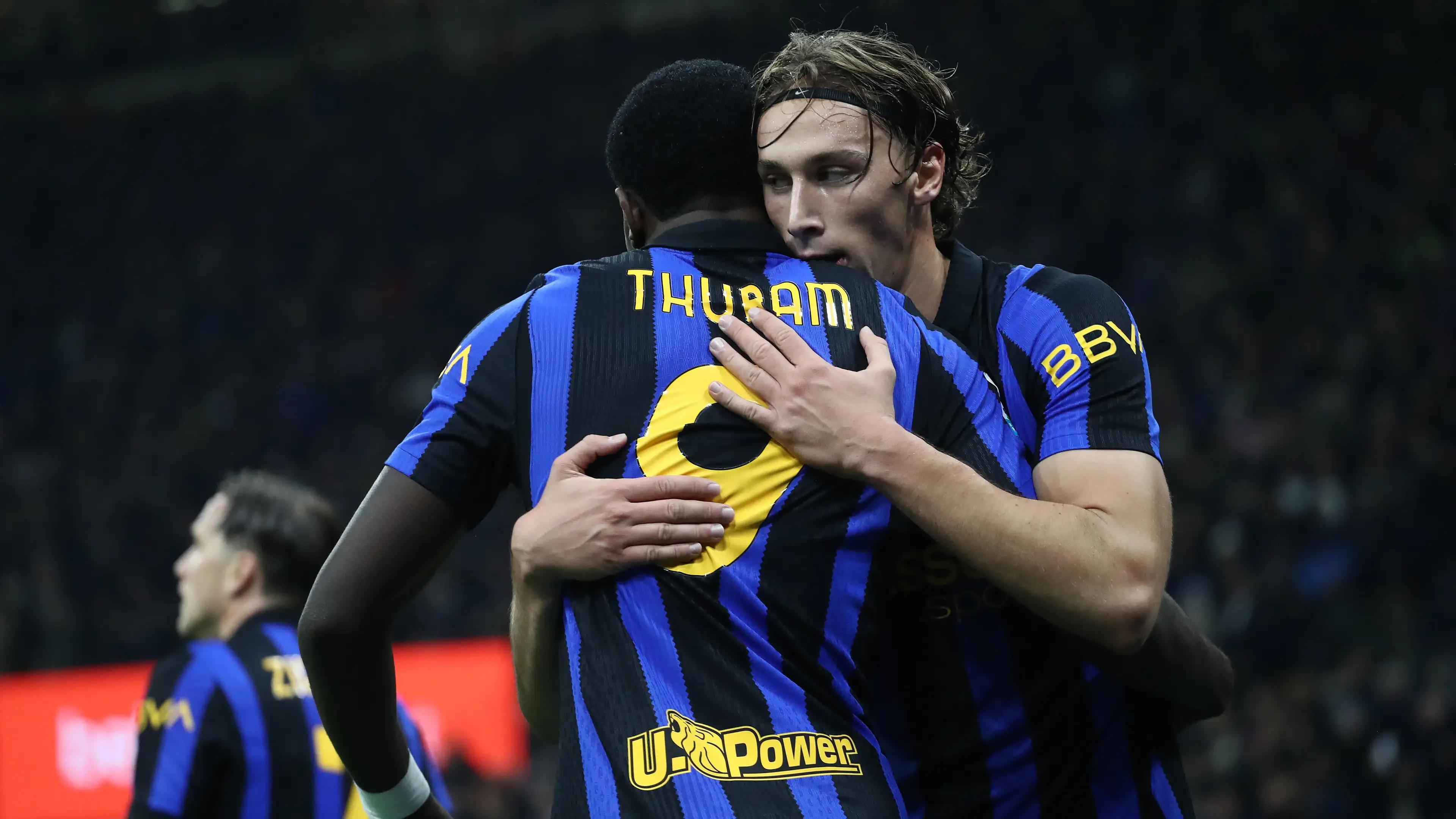
Inter 2–0 Como: Still No Answer to Inter’s Physicality
Four days after scoring nine in Lens, Como were squeezed out of their rhythm by an opponent they still cannot solve. Early goals from Pio Esposito and Marcus Thuram settled a match that exposed the gap between keeping possession and imposing your football.
 Marco
The most disappointing thing about this defeat was how familiar it felt. Como arrived at San Siro with six consecutive victories behind them, fresh from a European night that will remain part of the club’s history. Nineteen minutes into Sunday’s game, Inter were two goals ahead and we were trying to find a way to make our football work under pressure.
Francesco Pio Esposito scored in the 12th minute, Marcus Thuram added the second seven minutes later, and Inter deserved their 2–0 win. Nico Paz struck the woodwork late on, but that moment should not become a convenient explanation for a game in which Como created very little.
We have improved enormously. Against Inter’s physicality, intensity and ability to turn a loose ball into an attack, we still have no convincing answer.
Two goals before Como could settle
Fàbregas started Robert Sánchez in goal, with Máximo Perrone and Luis Milla behind an attacking line containing Lucas Da Cunha, Paz and Martin Baturina. Douvikas led the attack. There was plenty of technical quality in the team, but Inter immediately made accessing it difficult.
The opening goal came through their right flank. Thuram found Djed Spence’s overlapping run, and Spence delivered the low cross that Esposito converted. The move combined an outlet up front, a runner arriving outside him and a striker ready to attack the delivery. Como did not interrupt any of those connections quickly enough.
The second punished another failure to deal with a ball into the area. Álex Valle could not clear Piotr Zieliński’s low delivery, and Thuram finished. Valle’s intervention was the immediate error, but reducing the goal to one defender’s mistake would let the rest of the performance off too easily. Inter were already setting the speed and direction of the contest.
Their first-half match commentary records further opportunities for Carlos Augusto, including a shot Sánchez turned behind after Esposito’s lay-off. Como reached the interval without a shot on target. The two-goal margin reflected the balance of the half.
Physicality that disrupts the whole team
When I say Como still have no answer to Inter’s physicality, I mean more than the size of their centre-backs or the strength of their strikers. It is the way those qualities combine with pressure, compact positioning and quick decisions. Our players were being asked to receive, protect the ball and find the next pass before they had established any comfortable rhythm.
Inter’s forwards contributed at both ends. Esposito and Thuram scored, but they also helped prevent Como from building the attacks that might have supplied Douvikas. Behind them, Inter kept the central spaces crowded. A pass into midfield rarely offered the clean escape we needed.
Chivu described that plan clearly in his post-match assessment. He credited the forwards with disrupting the build-up and explained that Inter stayed compact to deny Como access behind their midfield, then attacked after regaining possession.
That is the problem Fàbregas has to solve. Technical ability remains our greatest strength, but it has to survive the conditions an opponent imposes. If the receiver cannot turn and the next passing option is covered, an apparently sensible possession becomes vulnerable. Lose it there and the defenders are suddenly facing Thuram with the team moving in the wrong direction.
Inter made Como uncomfortable with the ball and dangerous situations followed when we lost it. Their physical advantage had a tactical purpose throughout.
The possession figure offers little comfort
FotMob’s match statistics give Como 57% possession. They also show Inter leading 14–5 in shots, 33–11 in touches inside the opposition box and 1.81–0.21 in expected goals.
Those numbers describe the difference between having the ball and doing something threatening with it. Inter had already earned the option of defending a lead. They did not need to chase every pass across our back line to remain in control of the match.
The box-touch comparison is particularly revealing. Inter reached dangerous positions three times as often despite having less possession overall. Como’s passing did not consistently move the opposition far enough, or quickly enough, to open a route through.
An xG total of 0.21 also makes this difficult to frame as a finishing problem. Paz’s late effort might have changed the closing minutes, but Como did not build a sequence of good chances and waste them. The larger failure came before the shot.
The changes brought a response, not a turnaround
Fàbregas acted at half-time, introducing Samuele Ricci and Ivan Smolčić for Perrone and Baturina. Later, Kaiki, Maxence Caqueret and Mattia Liberali replaced Valle, Da Cunha and Yan Couto. The club’s report confirms the changes and the late search for a way back.
The double substitution at the interval was an acknowledgement that the starting balance had not worked. Bringing on another defender while removing an attacking midfielder made the immediate priority clear enough: give the team a firmer platform from which to compete.
It did not immediately remove Inter’s threat. Dimarco went close early in the second half, and Thuram continued to cause problems. Como eventually found more attacking moments, with Paz involved in the attempts to trouble Josep Martínez and then striking the woodwork near the end.
There is some credit in continuing to look for a goal rather than letting the afternoon unravel. But the improvement needs to be judged against the score and the passage of time. Inter were protecting a two-goal lead, and Como’s more encouraging spell arrived after the hosts had done most of the decisive work.
Douvikas, so devastating in France, could not provide the same impact here. That contrast says something about the service and support available to him. A striker cannot repeat a hat-trick when the team struggles to get him into comparable situations.
Fàbregas recognised what went wrong
In his comments to Sky Sport, reported by Eurosport, Fàbregas accepted Inter’s superiority and identified unusual losses of possession as a central problem. Exposing the team to Inter’s transitions had been costly.
He also resisted turning one defeat into a judgement on the whole season. That is sensible. Six successive wins were real, just as the shortcomings at San Siro were real. There is no need to discard one set of evidence to acknowledge the other.
Where I would push the analysis further is the description of those turnovers as unusual. They may be unusual for Como against other opponents. Against this opponent, the pressure that produces them is becoming a recurring obstacle. We need to understand why the familiar passing options become so much harder to use.
That work involves the distance between teammates, the support around a player receiving under pressure and the choice of when to play beyond the press. Asking everyone to pass more accurately is insufficient. So is assuming that adding a bigger player would resolve the whole issue. Como need ways to avoid being forced repeatedly into the contests Inter want.
A strong season, with an unresolved problem
The defeat leaves Como fifth on 23 points, with Inter moving to 28. Football Italia notes that this was Inter’s twelfth consecutive Serie A win in the fixture. Much of that history belongs to different teams and different eras, but the present-day difficulty is obvious enough without it.
The international break comes before Cagliari’s visit on 21 November. Como return to that fixture with plenty worth preserving: the league victories that preceded this match, the European progress and the confidence earned by players who are still developing together.
Sunday nevertheless deserves an honest review. We were beaten by a side that could hurry our decisions, shut off our preferred spaces and punish our mistakes. Inter’s physicality remains a problem Como have recognised without yet resolving. The next step is to arrive at this fixture with something more effective than the hope that our usual football will finally be enough.
Comments (2)