
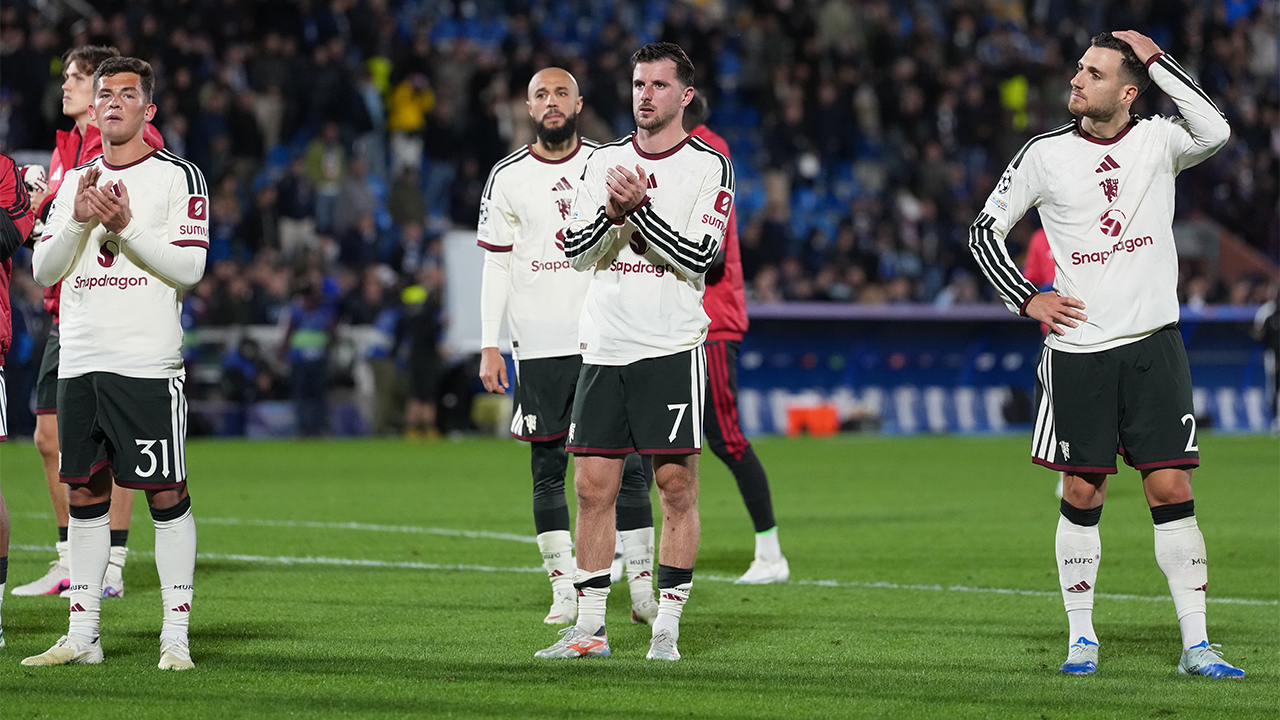
Como 4–1 Manchester United: A Night to Remember
Two goals and an assist from Nico Paz supplied the headlines. The movement, conviction and combinations around him supplied the explanation. Como dismantled Manchester United at the Sinigaglia and gave us a European night we will be talking about for years.
 Marco
There are results you check twice because they look wrong. Como 4, Manchester United 1 belongs in that category. Then you look at how the goals happened, and the score makes perfect sense.
Nico Paz scored twice. Tasos Douvikas and Jacobo Ramón added the others. Joshua Zirkzee’s stoppage-time reply arrived long after the contest had gone. For Como supporters, Wednesday offered the rare pleasure of watching an extraordinary occasion become an increasingly comfortable football match.
United supporters, meanwhile, have very serious questions to ask of their club.
Nico sets the terms
United had an early opportunity through Diogo Dalot. Como’s response was almost immediate: Lucas Da Cunha found Paz, who had room to set himself and curl a magnificent left-footed finish beyond Senne Lammens.
Barely two minutes gone, and the evening already had its defining image.
That opening also established the problem United would spend the match failing to solve. Give Nico time to receive facing goal and he can hurt you himself. Step towards him without covering the space behind, and he can find the runner.
His two goals and assist capture the end product. His influence was broader: he kept presenting United with decisions they could neither make quickly nor execute together.
The freedom behind the centre-forward
Fàbregas gave Paz freedom behind Douvikas, a role he discussed afterwards by recalling the licence he and Lionel Messi had enjoyed under Pep Guardiola at Barcelona. The relevant point was the permission to seek space, rather than remain tied to a fixed position. Fàbregas’s post-match explanation helps explain why Como’s nominal shape tells only part of the story.
For me, the crucial relationship was between the player finding those pockets and the striker threatening the space beyond them. Douvikas gave United’s centre-backs a reason to look over their shoulders. Nico gave them a reason to step forward. Those competing demands are exactly what a connected attack should create.
Da Cunha and Martin Baturina deserve their share of the credit, too. Como’s creative work did not begin and end with getting the ball to the most gifted player and hoping.
Douvikas turns control into breathing room
At half-time, the lead was still only one. Douvikas had tested Lammens, and an offside decision had prevented Como receiving a penalty after the goalkeeper brought him down. There was enough attacking promise to feel encouraged, and enough distance between the performance and the score to feel uneasy.
Four minutes after the restart, that changed.
The move ran through Da Cunha, Baturina and Paz before Nico released Douvikas. The striker finished past Lammens for 2–0, completing the kind of quick combination that makes possession purposeful. The club’s match report records it as his third goal in the competition.
This was an important reward for persistence. A centre-forward can spend a half making useful runs without getting the finish right. Douvikas kept offering the pass, and Como kept looking for him.
Ruthless when the opening came
Paz’s second, in the 57th minute, came through a different route. Carlos Baleba’s misplaced pass offered an opening; Nico seized it, drove forward and finished.
There is a temptation to file that goal under United’s mistakes. But recognition, acceleration and execution still belong to the player who punishes the error. Como did all three before United could recover.
Ramón supplied the fourth in the 76th minute, heading in substitute Kaiki’s cross. A centre-back arriving to finish a move from open play felt an appropriate expression of the confidence running through this team.
The Football Italia report also records Jean Butez tipping over an Amad effort. He still had work to do. Zirkzee eventually denied him a clean sheet, but by then the only remaining question was the final margin.
What the numbers actually say
Opta’s match analysis gives Como 11 shots to United’s 12, but eight Como attempts were on target. Expected goals favoured the hosts, 2.04 to 1.05.
Those figures are worth holding together. Como’s advantage came from the quality and execution of their attacks, rather than an overwhelming volume of shots. Four goals from 2.04 xG also tells us the finishing was particularly effective; it would be unreasonable to expect that return every week.
There is an especially satisfying historical detail in Opta’s account: Como became the first opponent to win their first European Cup or Champions League meeting with United by more than two goals.
That is quite an introduction.
Enjoy it, then carry it forward
United’s difficulties will dominate plenty of the coverage. From our end, the lasting point is how clearly Como’s players understood what they were trying to do. The combinations had purpose. The freedom given to Nico had support around it. When chances came, players took responsibility.
Fàbregas was already looking towards the next league match afterwards. He also reminded everyone that some of his players were making only their third Champions League appearance. That is an important perspective on a performance which looked so assured.
Como now have six points from three league-phase matches, with Sassuolo visiting on Saturday. There is another afternoon’s work approaching quickly enough.
We can leave the coaching staff to prepare for it. For a little while, supporters are entitled to linger over this one: the curl on Nico’s opener, the precision of the second goal, Ramón rising for the fourth.
Como 4, Manchester United 1. Can't help but share that scoreline again.
Comments (1)